

A Local Guide
Things to Do in Lyme Regis
Discover Lyme Regis on Dorset’s historic Jurassic Coast. Best known for its fossil-rich beaches and the iconic, sweeping harbour wall, The Cobb; a town that beautifully preserves its authentic, working fishing-village charm.
The headline attractions in Lyme Regis centre on its geological history and maritime heritage. Visitors can walk the historic stone structure of The Cobb harbour wall or search for fossils along Monmouth Beach and the coastline leading east toward Charmouth.
The town features two dedicated museums: the Lyme Regis Museum, built on the birthplace of pioneering palaeontologist Mary Anning, and the Dinosaurland Fossil Museum, located inside a Grade I-listed former chapel. Additionally, Marine Parade runs parallel to the seafront, linking the town's family-friendly beaches.
A long weekend is generally enough time to explore the town of Lyme Regis itself. However, extending your stay to a full week allows time to visit the surrounding Jurassic Coast – with Charmouth, Seaton, Beer, and Forde Abbey all in comfortable driving distance. A longer stay also provides the opportunity to hike the South West Coast Path to Golden Cap, the highest cliff on the south coast of England.
The Cobb and the harbour
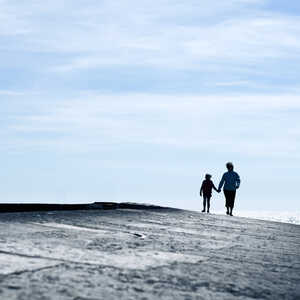
The Cobb is the curved stone harbour wall that defines Lyme Regis from any photograph you have seen of the town. It has been repeatedly rebuilt since its origins in the 13th century. It holds significant literary recognition – as both the setting for Louisa Musgrove’s fall in Jane Austen’s Persuasion, and featuring in the 1981 film adaptation of John Fowles’s The French Lieutenant’s Woman, where Meryl Streep filmed scenes at the wall's end.
A walk to the lighthouse takes roughly ten minutes. For safety, visitors should note that the upper level has no handrails and is highly exposed to southwesterly weather; the lower level is the recommended option during wet conditions. Throughout the season, local operators run boat trips and mackerel fishing excursions directly from the inner harbour.
Fossil hunting
Lyme Regis sits at the western end of the Jurassic Coast, England's only natural UNESCO World Heritage Site, which spans 95 miles of coastline from Exmouth to Studland Bay.
The cliffs around the town are composed of Blue Lias limestone and shale, laid down between 195 and 200 million years ago, and they erode constantly. Every storm and every winter landslip exposes new material on the beach.
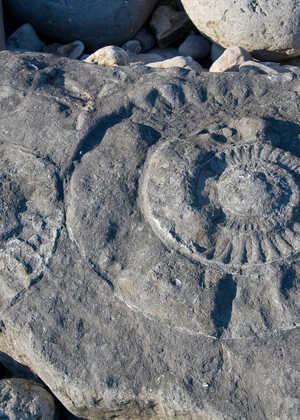
The two best places to fossil hunt on foot from the town are Monmouth Beach to the west of the Cobb, which has the famous Ammonite Pavement at its far end, and the stretch east towards Charmouth past Church Cliff.
Ammonites and belemnites are the most common finds. Loose material on the beach is fair game and legal to collect. The Ammonite Pavement itself is protected, and embedded specimens must be left where they are.
Fossil hunting along the Jurassic Coast involves distinct hazards that require careful planning. Visitors must check the tide times before accessing the beaches. The safest period is during a falling tide, entering the beach no more than two hours before low tide and returning no later than two hours after low tide.
Due to severe instability, the cliffs present a constant danger of sudden rockfalls, especially following heavy rainfall; visitors must stay well clear of the cliff base. Proper footwear, such as walking boots or wellington boots, is essential, and young children should never be allowed near the cliff face.
For an educational and safe experience, the Lyme Regis Museum and the Charmouth Heritage Coast Centre run regular guided walks. Of the two main locations, Charmouth Beach is widely recognised as the superior site for fossil finds, and its Heritage Coast Centre provides free admission.
Museums in Lyme Regis
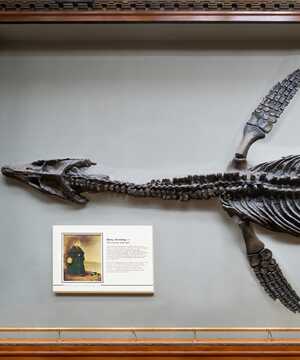
Lyme Regis Museum on Bridge Street is built on the site of Mary Anning's home, the cottage where she was born in 1799 and where she lived until her death in 1847. Anning discovered the first complete ichthyosaur skeleton at the age of twelve and went on to find the first plesiosaur and the first pterosaur skeleton outside Germany.
The museum's geology gallery holds the largest collection of locally-found ichthyosaurs in the country. It is open Tuesday to Sunday, closed Mondays except in school holidays. Tickets include unlimited return visits for a year.
Dinosaurland Fossil Museum on Coombe Street is a different proposition: more than 30,000 specimens packed into a Grade I listed former Independent chapel, the same chapel where Mary Anning was baptised. It is run by Steve Davies, a former chief palaeontologist for BP. Dogs are welcome, which is unusual for a museum, and it is open daily from 10 am to 4 pm.
The Lyme Regis Marine Aquarium sits on the Cobb itself and is a fun, educational visit for families with younger children.
Beaches in Lyme Regis
As well as the stunning views and attractions in the town itself, Lyme Regis is also home to some of the UK’s best beaches.
Monmouth Beach
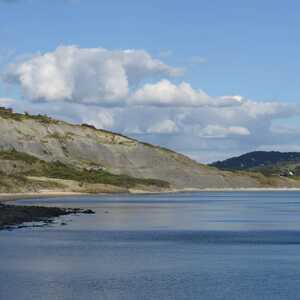
Located immediately west of the harbour, Monmouth Beach holds both historical and geological significance. It is named after the Duke of Monmouth, who landed at this site in 1685 to launch his rebellion. Today, it serves as a key fossil-hunting site, where visitors regularly find ancient ammonite specimens. At the westernmost end of the beach, the "ammonite graveyard" features a dense, exposed limestone ledge permanently packed with large fossilised shells. The shoreline also offers unobstructed views along the Jurassic Coast cliffs.
Cobb Gate Beach
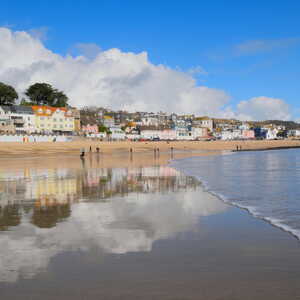
Running parallel to Marine Parade, Cobb Gate Beach – or Pebble Beach – comprises the eastern section of Lyme's main town seafront. A prominent stone jetty divides the shingle beach from the adjacent sandy swimming area.
Because of its central position, the beach offers immediate access to a wide variety of seafront amenities, including kiosks, restaurants, and equipment hire for watersports such as paddleboarding. Geologically, the beach faces south across Lyme Bay, providing clear views of the evening horizon. During exceptionally low tides, the limestone formation of Lucy's Ledge is fully visible on the shoreline.
Church Cliff Beach
Positioned on the eastern edge of the town, Church Cliff Beach is a mixed sand, shingle, and rock shoreline sitting directly beneath the elvated grounds of St. Michael the Archangel Church.
The beach is accessed via steps and a concrete ramp near the Marine Theatre. Because the tide regularly rises to meet the engineered sea wall, the entire beach is submerged at high tide, making visits strictly dependent on low tide schedules.
While it is an active area for intertidal fossil hunting, visitors should note that swimming is currently discouraged due to poor water quality warnings. Additionally, the towering cliffs remain highly unstable, requiring visitors to maintain a safe distance from the base.
East Cliff Beach
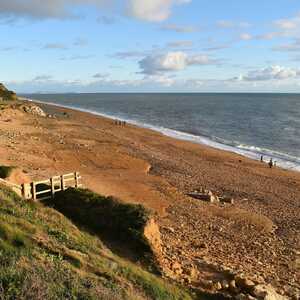
East Cliff Beach – locally referred to as Back Beach – stretches from the eastern edge of Lyme Regis toward Charmouth. It can be reached via the engineered Church Cliff Walk seawall or by descending 114 steps from the Charmouth Road car park.
The site is highly regarded for fossil collecting due to its proximity to the Spittles and Black Ven cliffs – the largest active mudslide in Europe – which constantly erode to deposit ancient ammonites and marine reptile fossils into the shingle below. While beach collection of loose material is permitted, digging directly into the cliff face is strictly prohibited.
Visitors must closely monitor local tide schedules, as rising waters completely cut off access to the exit points. Unlike the town's main sandy beach, East Cliff remains fully dog-friendly with off-lead access permitted year-round

Walking and the South West Coast Path
The South West Coast Path runs through Lyme Regis, and the stretch east towards Charmouth and Golden Cap is one of the most rewarding sections of the entire 630-mile trail. Golden Cap, at 191 metres, is the highest point on the south coast of England, and the round walk from Seatown takes about two hours.
West of Lyme, the path climbs through the Undercliff, a National Nature Reserve formed by repeated landslips and now a temperate rainforest in miniature, and continues to Seaton.
The Undercliff is one-way: there is no exit between Lyme and Seaton, so plan for around three to four hours and check the weather.

Lyme Regis with children
Lyme Regis is geographically well-suited for families travelling with primary-age children. Outdoor activities centre on the main sandy beach and the cliffside Mini Golf and Jurassic Footgolf courses overlooking the harbour.
For older children, Tunnel Tree Tops provides forest-based zip lines and high ropes courses. Inside the town, the Marine Aquarium on the Cobb takes approximately one hour to tour, making it a viable rainy-day option alongside the Dinosaurland Fossil Museum.
For an educational family activity, a guided fossil walk, where children learn to discover their own geological specimens along the shore, is a great option. In the event of poor weather, the Marine Theatre has a seasonal program of family films and stage productions. Logistically, the town's small footprint is highly accessible for pushchairs, though the main thoroughfare of Broad Street features a steep gradient that requires effort to push against.

Eating and drinking in Lyme Regis
Lyme Regis has more good independent food per square mile than a town of seven thousand people has any right to.
The seafront and harbour area concentrates the casual options: fish and chips from the kiosks on Marine Parade, the Cobb Arms and the Rock Point Inn for pub food with a view. The Pilot Boat on Bridge Street is the town's best-known pub and a good rainy-day lunch.
For an excellent local dining experience in Lyme Regis, head to The Alexandra Hotel & Restaurant on Pound Street. Open to non-residents, this AA Rosette venue is widely considered the premier spot in town for lunch, afternoon tea, and dinner.
The kitchen overlooks Lyme Bay and focuses heavily on local food provenance. Its signature four-course set dinner menu changes seasonally to showcase sustainably caught Lyme Bay fish and fresh West Country produce.
Events in Lyme Regis in 2026
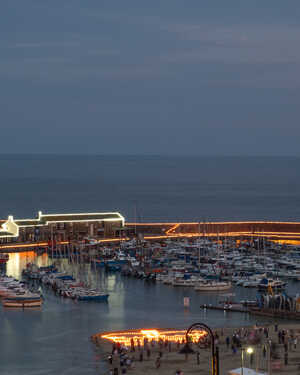
Lyme Regis hosts numerous major events throughout the year that are well worth planning your trip around. Given their popularity and high attendance, it is recommended to book your hotel accommodation at the earliest possible chance.
- Lyme Regis Fossil Festival: 13 to 14 June 2026
- B Sharp Busking Festival: 27 June 2026
- Sausage and Cider Festival: 4 July 2026
- Regatta and Carnival Week: 31 July to 8 August 2026
- Folk Weekend: 28 to 31 August 2026
- Lyme Splash Water Polo Sea Championship: 1 to 2 August 2026
- Fireworks on the beach: 7 November
The Fossil Festival is free and centred on the museum and Marine Theatre, with talks, walks, and trade stands throughout the weekend. It is one of the busiest weekends of the year in the town. The Folk Weekend is free live music along the seafront over four days.
Day trips from Lyme Regis
If you want to explore further afield, these four-day trips offer excellent scenery and history within a short drive of the town:
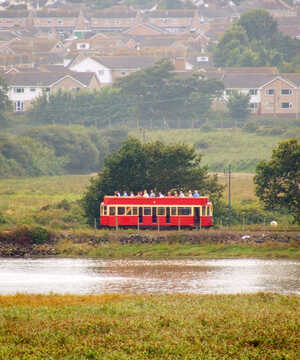
Seaton Tramway runs three miles of narrow-gauge heritage electric trams through the Axe Valley alongside two nature reserves, and is a relaxed half-day with strong birdwatching.
Beer Quarry Caves, ten miles west, are 2,000-year-old Roman-era underground caverns whose stone was used in Westminster Abbey and the Tower of London. Guided tours run from before Easter through October.
Forde Abbey and Gardens, 12 miles north, is a 900-year-old former Cistercian monastery with 30 acres of award-winning gardens and one of the longest unfurled water features in the country.
Charmouth, two miles east, is closer and shorter: free Heritage Coast Centre, guided fossil walks, and a less commercial feel than Lyme.
Practical and travel advice
The nearest train station is Axminster, on the London Waterloo to Exeter line, about 2 hours and 40 minutes from London. Buses run from Axminster to Lyme Regis, and a taxi takes around 15 minutes.
Parking in the town is the single most common visitor complaint. The main car parks (Holmbush, Charmouth Road, Cobb Road) fill by mid-morning in summer, especially Saturdays in July and August. If you are coming by car for the day, arrive before 10 am or after 4 pm.
The town is hilly. Broad Street is steep enough that some visitors prefer to walk down it and take the bus back up. Pound Street, where the Alexandra sits, is at the top of the hill, which gives the hotel its spectacular sea views.
Off-season visits, particularly October to March, make the town quieter, the fossil hunting at its best (winter storms expose new material), and accommodation rates lower. The trade-off is shorter days and the chance that boat trips and some restaurants will be closed midweek.
Where to stay in Lyme Regis
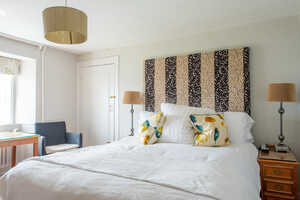
The Alexandra is a 25-bedroom independent hotel on Pound Street, a two-minute walk from the town centre and five minutes from the seafront. The original building is a Georgian dower house from 1735, Grade II listed, with gardens looking south over Lyme Bay and the Jurassic Coast.
Posted on May 21st 2026
 Updating page...